
Sign up for the ING newsletter to receive news and announcements.
Am I My Brother’s Keeper?
A Call to Conscience Across Faiths
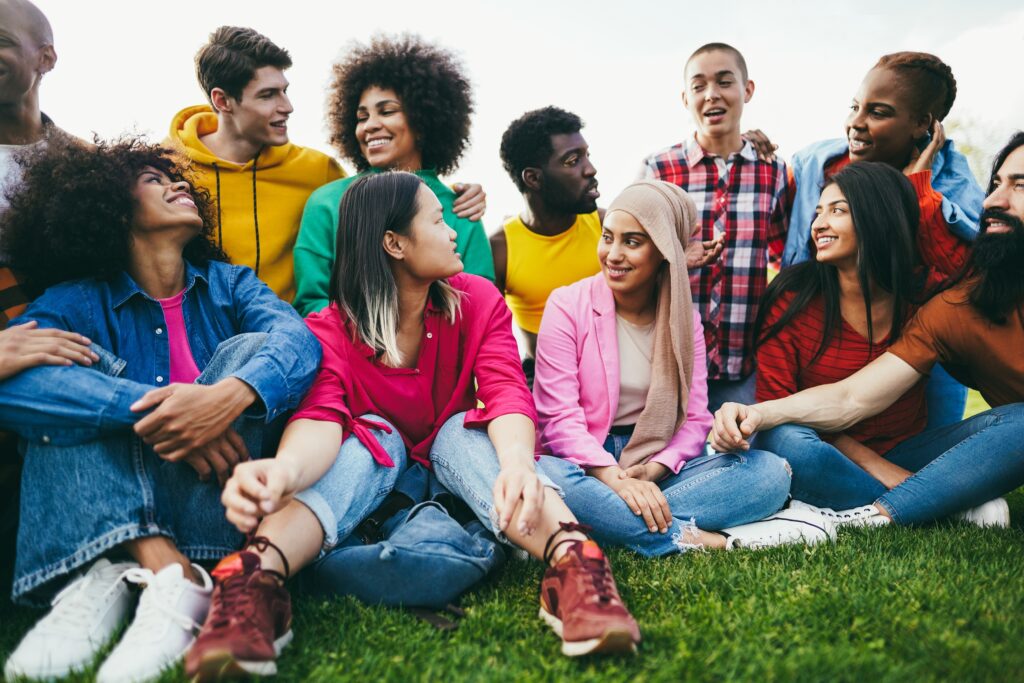
Dear friends,
On this Juneteenth, few questions in scripture cut as deeply—or feel as urgent today—as the one Cain poses to God: Am I my brother’s keeper?
The question arises in the Book of Genesis, after Cain has taken the life of his brother Abel. When God inquires about Abel’s whereabouts, Cain deflects: “I do not know; am I my brother’s keeper?” It is not only a denial of guilt, but a profound moral rupture—one that echoes across human history.
The three Abrahamic faiths—Judaism, Christianity, and Islam—respond with a resounding yes.
The Quran recounts the same tragic story of Cain and Abel (Qabil and Habil) and offers a sobering lesson. After Cain kills his brother out of envy, God declares:
“Because of that, We decreed upon the Children of Israel that whoever kills a soul—unless for a soul or for corruption done in the land—it is as if he had slain all of humanity. And whoever saves one—it is as if he had saved all of humanity.”
(Quran 5:32)
Just before this verse, the Quran gives voice to the moral restraint Abel demonstrates:
“Recite to them the story of Adam’s two sons, in truth, when each offered a sacrifice [to God], and it was accepted from one of them but not from the other. [The latter] said, ‘I will surely kill you.’ The former said, ‘Indeed, God only accepts from the righteous. If you raise your hand against me to kill me, I will not raise mine against you. Indeed, I fear God, Lord of the worlds.’”
(Quran 5:27–28)
This story teaches that violence begins with resentment and dehumanization—but it also shows us another path: one of righteousness, self-restraint, and responsibility.
In Jewish tradition, tikkun olam—repairing the world—is a sacred call to collective action and moral obligation.
In Christianity, Jesus (peace be upon him) teaches that loving one’s neighbor is inseparable from loving God, urging his followers to feed the hungry, welcome the stranger, and stand with the oppressed.
In Islam, the Prophet Muhammad (peace be upon him) said, “The Muslim is the one from whose tongue and hand others are safe.”
To be our brother’s or sister’s keeper means to take responsibility for one another’s well-being—not only for those in our immediate circle, but especially for those most vulnerable in our society today:
- Latine and Hispanic communities, vilified by dehumanizing rhetoric and harsh immigration policies
- Iranians, often stigmatized and excluded due to geopolitical hostilities
- Jewish and Israeli individuals, facing a troubling surge in antisemitic violence and hate
- Muslims, Arabs, and Palestinians, enduring Islamophobia, racism, erasure, and collective blame
- Immigrants of all backgrounds, scapegoated and demonized across the political spectrum
These communities are not interchangeable, and their struggles are not identical. Yet they share a common vulnerability in a time marked by polarization, fear, and disinformation.
Now is the time for moral clarity and spiritual courage. Scripture is not merely a historical record—it is a guide for how to live with conscience, compassion, and community.
So, what can we do?
- Learn: Educate yourself about the histories, identities, and challenges of others. Understanding erodes fear.
- Listen: Hear the pain, hopes, and fears of those beyond your own group. Listening is an act of solidarity.
- Speak up: Challenge injustice—especially when it emerges within your own community. Silence enables harm.
- Reach out: Be present for those feeling isolated or targeted. Check in with your neighbors and co-workers.
- Support: Give your time or resources to organizations that uphold dignity and foster interfaith and interethnic understanding.
Let us not echo Cain’s evasion or indifference.
Let us respond to the divine question with humility, faith, and action:
Yes—I am my brother’s keeper. I am my sister’s keeper. And I will not stand idly by.
With hope and resolve,
ING team
ING Interreligious and Interethnic Panels
We invite you to host an Interreligious or Interethnic Panel—engaging, dialogue-driven sessions designed for corporations, educational and other institutions, and community centers committed to addressing all forms of bigotry.
These panels create impactful spaces for exploring shared struggles, challenging stereotypes, and fostering solidarity across lines of faith, race, and ethnicity. Through open, respectful conversation, participants deepen their understanding of one another and gain practical tools for building more inclusive environments—places where everyone feels seen, heard, and valued.
Each session includes reflections on questions such as: What do we want you to know about us? How is the current political environment affecting our community? What does true allyship and solidarity look like?
Our Interreligious Panels feature representatives from the five major world religions: Islam, Christianity, Judaism, Buddhism, and Hinduism. Our Interethnic Panels include voices from Indigenous, Black, Asian, Latine, Muslim, and Jewish communities, offering a broad and nuanced exploration of identity and lived experience.
These panels may be featured as part of our Inclusion and Belonging Workshops or offered as stand-alone seminars for students, staff, and community members.
Learn more about our Inclusion and Belonging Workshops here and educational seminars here. To speak with someone from our team, contact us at Mail@ing.org.