
Sign up for the ING newsletter to receive news and announcements.
By Maha Elgenaidi, Executive Director (Bio), ING (Intercultural Networks Group)
May 21, 2026
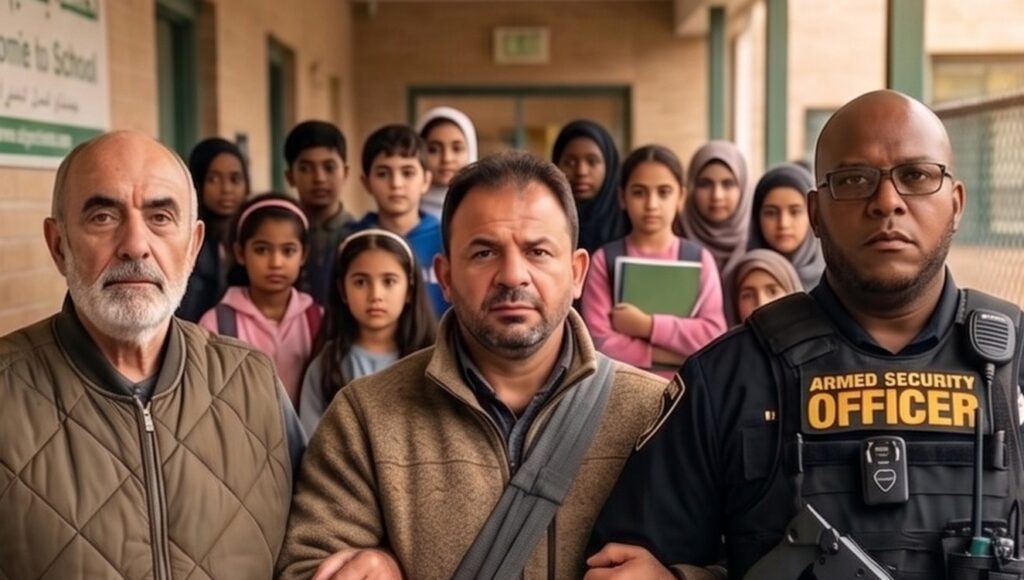
Honoring the Lives We Lost
Like Muslim Americans and countless Americans of every faith and none, I’ve spent the past several days grieving and trying to make sense of the horrific attack on the Islamic Center of San Diego.
But before anything else, we have to start with the lives that were lost.
Amin Abdullah. Mansour Kaziha. Nader Awad.
These three men died protecting others. According to authorities and community leaders, they helped delay and distract the attackers, actions that likely prevented an even greater massacre involving roughly 140 children who were inside the mosque and school complex at the time.
Amin Abdullah, the mosque’s security guard and father of eight, reportedly engaged the shooters and alerted the community to lock down classrooms. Mansour Kaziha, a longtime elder and beloved figure in the community, and Nader Awad, a neighbor who rushed to help, also gave their lives trying to stop the attack.
These men were not political symbols. They were fathers, elders, neighbors, community members, and human beings. Their courage reflects the very best of humanity in the face of unimaginable evil.
As Americans, we honor them as heroes.
Understanding the Ideology Behind the Attack
At the same time, we cannot ignore what investigators are increasingly uncovering about the alleged perpetrators and the ideology that inspired them.
Authorities say the two teenage suspects were radicalized online and influenced by white supremacist ideology, including the so-called “Great Replacement” conspiracy theory. Investigators reportedly found anti-Muslim writings, neo-Nazi symbols, and rhetoric targeting Muslims, Jews, Black people, immigrants, women, LGBTQ people, and others.
This matters because we need to be clear-eyed about what we’re dealing with.
This was not simply an isolated act of anger. Nor was it merely about ignorance of Muslims alone. It appears to have been rooted in a broader ecosystem of white supremacist extremism in which Muslims become one symbolic target within a larger worldview built on fear, demographic panic, conspiracy theories, and dehumanization.
That distinction shapes how we respond.
Yes, education about Muslims and Islam matters deeply. Much anti-Muslim prejudice is fueled by ignorance, misinformation, political rhetoric, and lack of meaningful interaction with Muslim Americans. Research consistently shows that when people learn about Muslim Americans and Islam, hear human stories, and engage across differences, prejudice can decrease.
That work matters, and it’s work organizations like ING and many others have been doing for decades.
But we also need to be honest: white supremacist radicalization requires broader intervention. A teenager immersed in conspiracy-driven online ecosystems may not be moved simply by hearing an “Islam 101” presentation. We are dealing with propaganda pipelines that normalize hatred itself.
The Warning Signs We Cannot Ignore
And perhaps the most disturbing, but also most important, aspect of this case is the age of the alleged perpetrators.
Seventeen. Eighteen.
Young people today are growing up in digital environments saturated with conspiracy theories, outrage algorithms, isolation, dehumanization, and extremist content. They are being recruited online into communities that turn fear and resentment into identity.
The fact that these individuals were reportedly only 17 to 18 years old should deeply concern us. This is not just a crisis of anti-Muslim bigotry. It is also a crisis of youth radicalization.
What we are seeing is a generation of young people increasingly vulnerable to online ecosystems that reward anger, grievance, conspiracy thinking, and dehumanization. The digital world is shaping identity in ways many adults still do not fully understand.
Prevention Before Radicalization
But their age also tells us something hopeful: people are not born hateful.
These attitudes are learned, reinforced, and normalized, which means they can also be interrupted.
So prevention matters.
We must invest earlier in education, human connection, mentorship, media literacy, and healthier pathways for identity and belonging.
Schools are not just places for academic instruction. They are one of the few places where young people can still learn critical thinking, empathy, civic responsibility, religious literacy, and how to engage people different from themselves.
If we want to prevent future violence, we cannot wait until young people are already immersed in extremist ecosystems online. We have to invest earlier in human connection, civic education, and opportunities for meaningful cross-community engagement.
A Message to Muslim Americans
For Muslim Americans, this attack feels painfully close to home. Many are afraid. Many are retraumatized. Many are exhausted from repeatedly explaining their humanity after every act of violence targeting our communities.
To Muslim American communities, I would say this: take the time you need to grieve. Strengthen security where necessary. Stay vigilant. But do not retreat from society. The answer to hate cannot be isolation.
Continue building relationships with your neighbors, coworkers, schools, and broader communities. The overwhelming majority of Americans reject this hatred.
A Message to Americans of Other Faiths or None
To Americans of other faiths or none, this is a moment for solidarity, not silence.
Muslim Americans should not have to face this grief alone. An attack on a house of worship is an attack on the moral fabric of society itself.
This is also a moment to reject the dangerous normalization of conspiracy theories and dehumanizing rhetoric in our public discourse. Language matters. Ideas matter. When groups of people are repeatedly portrayed as threats to society, it creates the conditions in which violence becomes easier to justify.
What Individuals Can Do Right Now
- Refuse to normalize dehumanizing rhetoric. Violence rarely begins with violence. It begins with language that portrays entire groups as threats, invaders, or enemies. Conspiracy theories like the “Great Replacement” do not stay online in harmless form. They create climates where violence becomes imaginable. We must challenge those narratives consistently, whether they target Muslims, Jews, immigrants, Black Americans, or any other community.
- Build real relationships across differences. Hatred thrives in isolation and stereotypes. Human connection remains one of the most powerful antidotes to prejudice. Visit one another’s houses of worship. Attend community events. Share meals. Raise children who know people different from themselves personally, not just through headlines or social media caricatures.
- Teach and practice media literacy at home and in school. Parents, mentors, faith leaders, and community members need to understand how online radicalization works. Young people are spending enormous amounts of time in digital environments where algorithms reward outrage, grievance, and extremism. We must teach them how propaganda spreads, how scapegoating works, and how to critically evaluate what they consume online. This applies equally in the classroom: students need to learn how extremist movements manipulate fear, identity, and grievance, and how to recognize dehumanizing narratives before they take root.
- Reject selective empathy and collective blame. The same individuals and movements that vilify one community often target others as well. We cannot condemn hatred only when it affects our own group. We must reject anti-Muslim bigotry, antisemitism, racism, xenophobia, and all forms of dehumanization consistently and without hesitation.
- Invest in institutions that build belonging and pluralism. Interfaith organizations, schools, youth programs, and community initiatives matter. They create spaces where people can encounter one another as human beings rather than abstractions. Hate flourishes where belonging collapses. Prevention requires intentionally building stronger civic and human bonds.
What Schools Must Do, and What Parents Should Demand
- Teach religious literacy and inclusive American history. Students should learn about Muslims, Jews, Christians, Sikhs, Hindus, Blacks, Asians, Latine, Indigenous, immigrants, and other communities as part of the American story, not as outsiders to it. Young people need a fuller understanding of who helped build this country and how different communities have contributed to its democracy, culture, and prosperity.
- Create opportunities for meaningful cross-group interaction. Schools remain one of the few places where young people from different backgrounds can still meaningfully engage one another. That matters more than ever. Students who build real relationships across racial, religious, and cultural differences are less vulnerable to stereotypes, fear, and extremist ideologies.
In my home state of California, ethnic studies is now becoming part of educational requirements. That is an important step forward, but it cannot remain an isolated course or unfunded mandate. Ethnic studies should be approached as an interdisciplinary effort woven throughout K–12 education, including literature, history, civics, media literacy, and social studies.
If we are serious about preventing hate and extremism, students need sustained opportunities throughout their education to understand one another’s histories, identities, and shared humanity.
That is how we begin to counter white supremacist ideologies, not only by responding after violence occurs, but by preventing the conditions that allow hatred and dehumanization to take root in the first place.
Honoring Their Sacrifice Through Action
The men who died in San Diego protected children they loved. The question before the rest of us is whether we will build the kind of society worthy of their sacrifice.
We honor them not only by mourning them, but by confronting the hatred that took them from us, together.
Building the Relationships That Prevent Hate
At ING (Intercultural Networks Group), we have been doing this work for decades: building cultural awareness, countering misinformation, strengthening cross-community relationships, and helping schools, workplaces, and institutions foster genuine inclusion and belonging. If you’d like to bring our programs to your community, visit www.ing.org or write to Mail@ing.org.